The Ben Gurion Risk Model
What would a counter-air attack look like?

The FT reported that fifty-two US combat aircraft are parked at Ben Gurion International airport. They have been parked there because the forward airbases on the Gulf littoral have been badly damaged. Even if the facilities themselves are still functional, the forcing issue is that the risk to aircraft on the ground there is too high because the forward bases are within range of Iran’s plentiful short-range ballistic missiles. Rear-area airbases like Prince Sultan AFB and airports like Ben Gurion International are more protected by distance. Ben Gurion is 1,500km from Tehran, which means that Iran has to use scarce MRBMs to attack it.
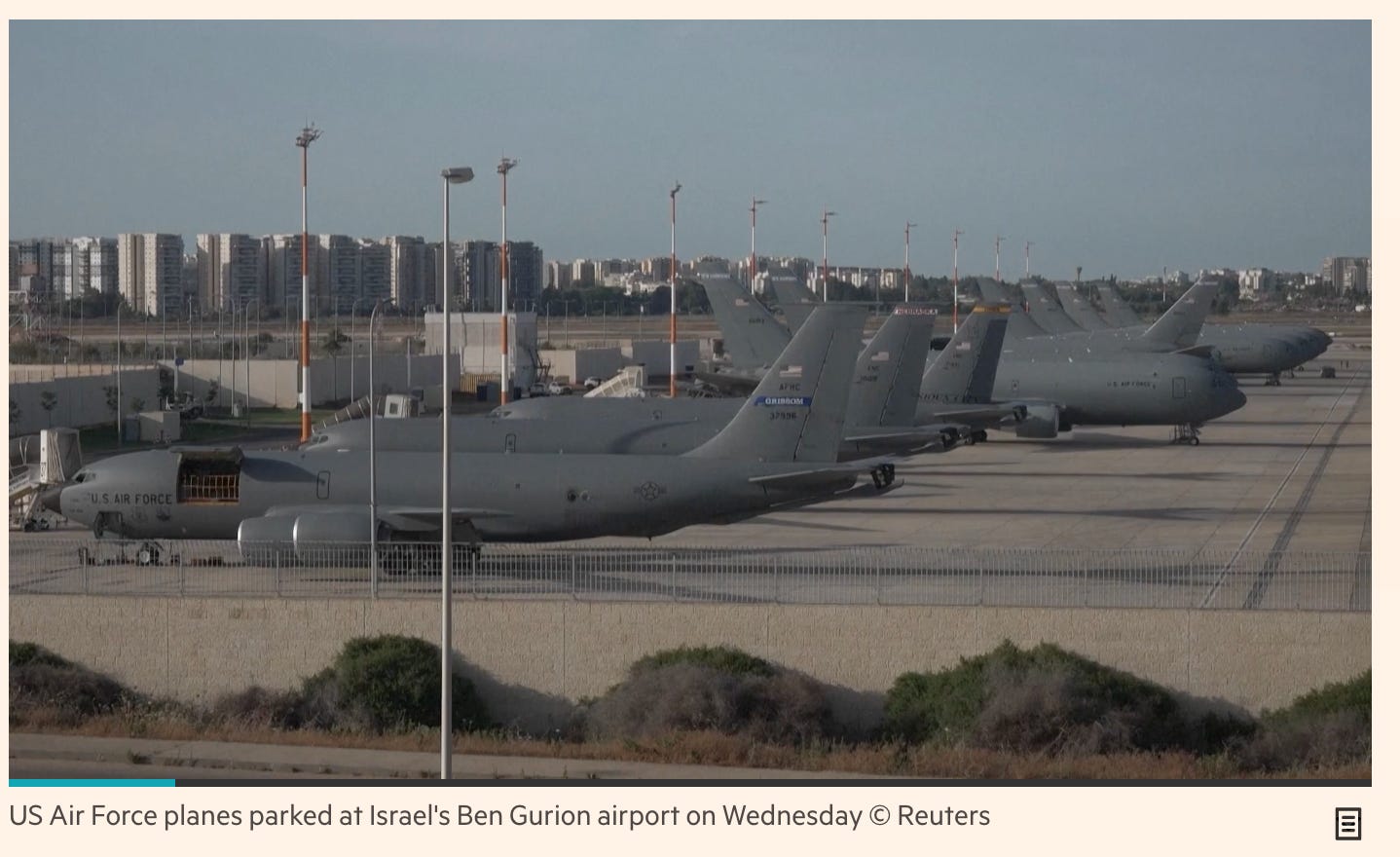
But this does not mean that there is no risk. In fact, concentration of assets like this naturally creates concentrated risk exposure, as we saw in the counter-base war model, where we found that concentrating the birds at six main bases in Asia instead of dispersing them to twenty-four increased expected US aircraft losses from 336 to 392. Iran can launch concentrated salvos of missiles to overwhelm active base defenses and bag a bunch of expensive birds with strikes on the apron using missiles armed with submunitions.1 One may say that the risk is worth taking. But how big is the risk exactly? What does Iran need to do to bag these juicy targets? How likely is it to succeed?
In what follows we undertake an operational analysis of an Iranian counter-air attack on US aircraft at Ben Gurion International Airport. This is a counter-air model instead of a counter-base one because we are modeling a single attack on aircraft parked on the apron. We do not consider hard-kill targets like radar installations and focus specifically on a dedicated attack on aircraft on the ground.
It is likely that the US has concentrated its air power at Prince Sultan in the same way it has at Ben Gurion. If so, then our model applies qualitatively to those exposures as well. But the purpose is not so much to model such an attack per se, but rather to gain a deeper understanding of the problem of base vulnerability; in particular, to get a better handle on the risks arising from concentrated force postures.
