The Hormuz Weapon
Iran is now the regional hegemon of the gulf

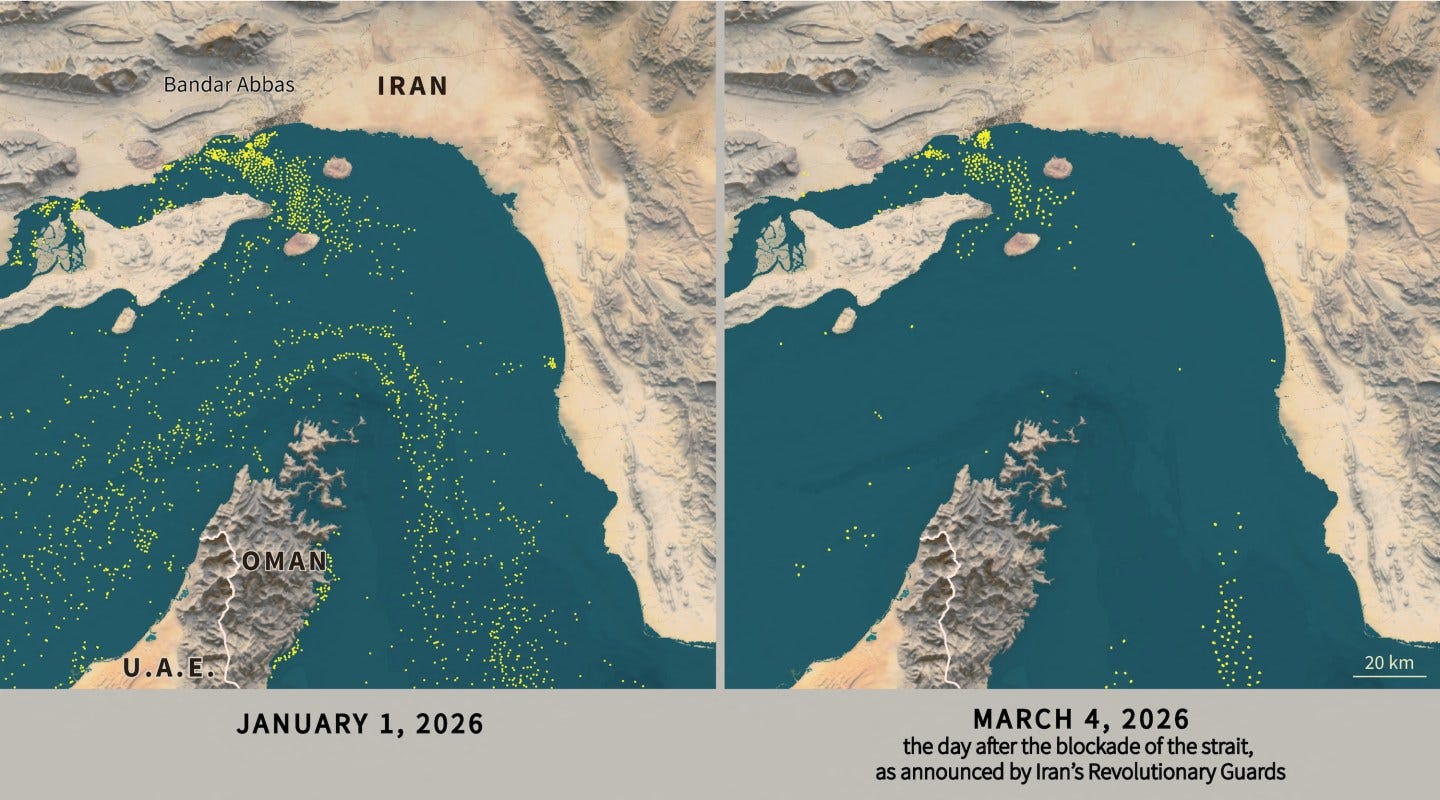
Nicholas Mulder, a personal friend and a very sharp knife, writes in the Financial Times that the Hormuz weapon is an economic weapon. I do not think that is a good way to think about this issue. Unlike the rare earths weapon or the dollar weapon, it does not exploit economic or financial structures. Rather, the Hormuz weapon exploits a decisive military and tactical advantage, comparable to a naval blockade by the Royal navy. A more appropriate analogy for the source of alpha here is high ground or a defender friendly feature of the terrain.
What allows Iran to control Hormuz is that it can bring any ship passing through under immediate and effective fire control.
The economic weapon picture also misleads in that it reduces the target of the weapon to the world economy and the faraway great power that attacked Iran. And that is certainly one target.
But the more important target are the oil monarchies across the gulf. Iran can use the Hormuz weapon to coerce the oil monarchies. In effect, the Hormuz weapon gives the Iranians not just a veto over access to gulf energy, but also a veto over the policies pursued by the gulf Arabs. It is this leverage over its oil-rich neighbors, combined with its ability to withstand all-out US aerial attack, that makes Iran the regional hegemon of the gulf.
